Latency-aware modeling • Glioma grading • Tumor onset prediction • XAI with SHAP & LIME • YOLOv5
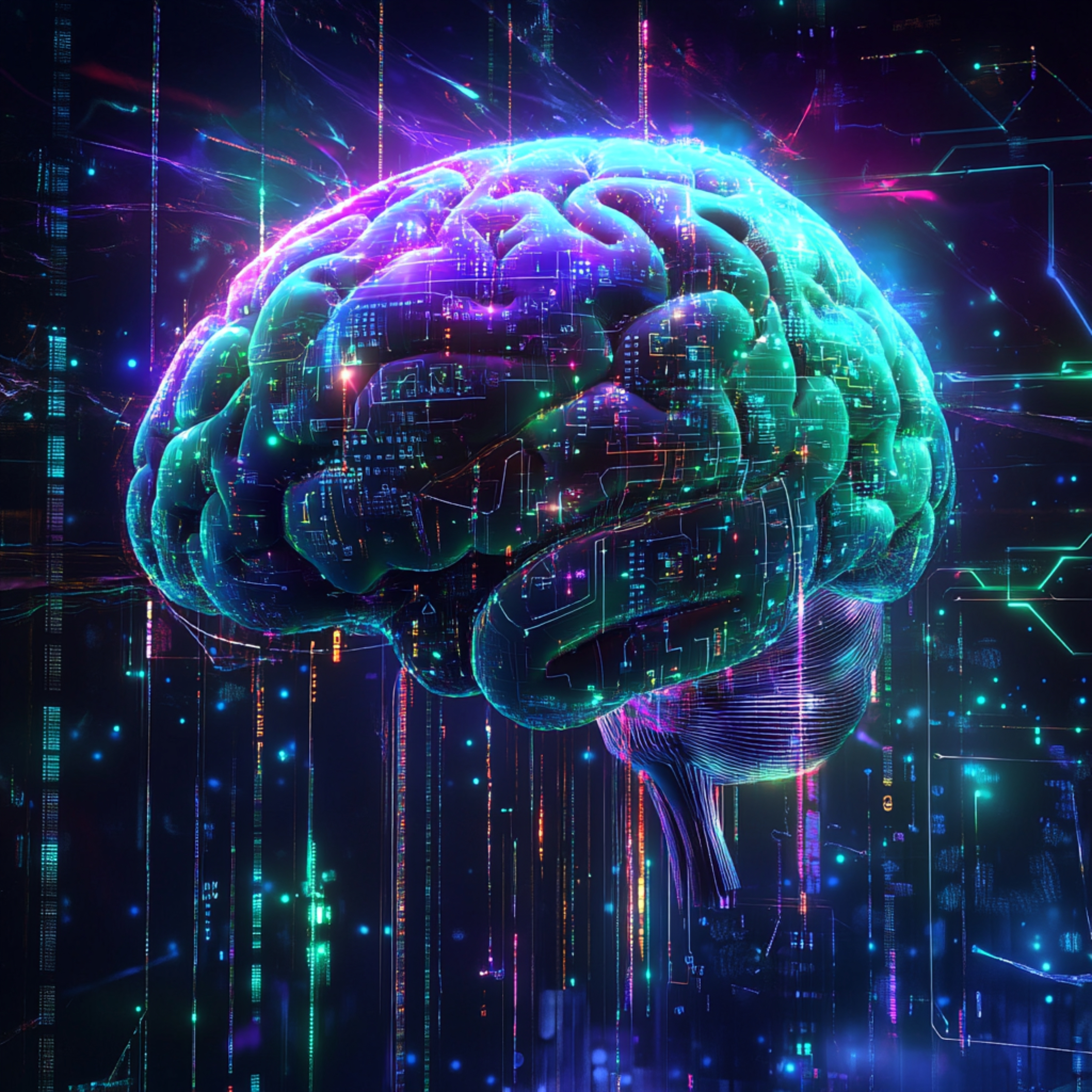
This research internship aimed to develop an AI-driven framework for classifying brain tumours using deep learning, while also focusing on explainability to ensure clinical transparency.
✅ Built 7 CNN models for tasks like tumour detection, grading, onset estimation, and deterioration prediction
✅ Utilized LIME and SHAP for explainable AI ✅ Object detection architectures such as YOLO (You Only Look Once) have been used to localise and classify anomalies in medical images in real-time. ✅ Worked with top datasets like UPENN-GBM, UCSF-PDGM, etc.
✅ Developed a unique temporal model to estimate glioblastoma progression
- Introduction
- Problem Statement
- Literature Review
- Datasets Used
- Methodology
- Results & Evaluation
- Discussion & Insights
- Challenges Faced
- Conclusion & Future Scope
- References
- Appendix
Brain tumour detection is a critical challenge in medical diagnostics. The ability to automate tumour classification using non-invasive imaging like MRI improves early diagnosis and treatment. This project applies Convolutional Neural Networks (CNNs) to detect and classify tumours, enhanced by Explainable AI methods (SHAP, LIME) and temporal modelling to track progression.
- 🔹 Build DL classifiers for tumour detection & classification
- 🔹 Distinguish between multiple tumour types and grades
- 🔹 Predict approximate tumour onset
- 🔹 Forecast deterioration risk
- 🔹 Enhance transparency with explainable AI (SHAP, LIME)
- 🔹 Enable transfer learning for broader histopathological analysis
Recent works show a transition from classical ML (Naive Bayes, SVM) to CNNs for medical imaging.
Notable tools and findings:
- YOLOv5 for tumour localization
- Hybrid deep learning + XAI for transparency
- Surveys from MDPI, IEEE, and Elsevier highlight trends in AI-driven neurodiagnostics
📖 Key References:
- Hybrid Explainable Model for Brain Tumour Classification (2023)
- Performance Evaluation of CNN Models (2023)
- Deep Learning Tumour Classification Survey (2024)
📊 Datasets Used
🧠 Dataset A — Brain Tumor MRI (Kaggle)
Use Case: Multiclass Tumor ClassificationImages: 7022 T1-weighted contrast-enhanced MRIs
Classes: Glioma, Meningioma, Pituitary Tumor, No Tumor
Structure: Organized folder-wise, ideal for CNNs
Link: 🔗 Brain Tumor MRI Dataset
🔍 Dataset B — Brain Tumor Database BTD-600 (Kaggle)
Use Case: Binary Classification (Benign vs Malignant)Images: 600 real-world MRI scans
Challenge: Requires augmentation & regularization due to small size
Link: 🔗 Brain Tumor BTD-600
🏥 Dataset C — UCSF-PDGM (TCIA)
Use Case: Glioma GradingModality: FLAIR, T1, T2
Labels: WHO Grades II, III, IV
Source: Preoperative Diffuse Glioma MRIs
Link: 🔗 UCSF-PDGM Dataset
🧬 Dataset D — Breast Histopathology Images (Kaggle)
Use Case: Binary IDC Detection via Transfer LearningImages: 277,524 image patches
Classes: Invasive Ductal Carcinoma (0 or 1)
Note: RGB histology images, not MRI
Link: 🔗 Breast Histopathology Dataset
🧪 Dataset E — UPENN-GBM (TCIA)
Use Case: Tumor Onset Estimation & Progression ForecastingType: Longitudinal GBM MRIs (multiple time points)
Labels: Tumor progression & deterioration over time
Link: 🔗 UPENN-GBM Dataset
- NIfTI &
.matformats - Histogram equalization, resizing
- Masking, border extraction
- 3D CNNs & ResNet-50 variations
- Custom shallow CNN for fast inference
- Final UPENN-based temporal model
- LIME: Local Interpretable Model-agnostic Explanations
- SHAP: SHapley Additive exPlanations
All the model architectures and training notebooks can be found inside the Models/ folder.
Each model includes:
.ipynbnotebook with full explanation and outputs.pyscript version for production use
📌 Models Included:
- Model 1: CNN Classifier
- Model 2: Gaussian Naive Bayes
- Model 3: Glioblastoma grading
- Model 4: Transfer Learning to IDC Detection on Breast histopathology images
- Model 5: Tumour Onset Predictor and Deterioration Estimator
- Model 6: XAI with SHAP & LIME
- Model 7: YOLOv5 Tumor Localization
- Achieved up to 94% accuracy in binary tumour detection
- Tumour grading model (multi-class) reached reasonable accuracy
- SHAP/LIME outputs aligned with clinical MRI regions
- Temporal model predicted GBM deterioration window with high correlation
- Explainable models outperform black-box CNNs in trust and usability
- Transfer learning greatly reduced training time on small datasets
- fMRI-based onset prediction remains a novel and promising field
- GPU & RAM limitations on Google Colab
- Data imbalance in tumour grading tasks
- Integrating SHAP for 3D models required advanced wrapper logic
- Lack of required datasets to be used to predict Tumour Onset and its Deterioration
This research demonstrates the effectiveness of XAI-enhanced deep learning for tumour diagnostics.
Future directions:
- Expand to multi-modal data (clinical + imaging)
- Extend temporal modelling to other neuro-oncological conditions
- Deploy web-based diagnostic interface for hospitals
This research project was conducted under the mentorship of Prof. Aritra Hazra, Department of Computer Science and Engineering, IIT Kharagpur.
I sincerely thank him for his valuable guidance, feedback, and support throughout the internship.
If this project contributes to your research, feel free to cite or acknowledge it via:
@misc{SxBxcoder2025braintumor,
  author       = {Sayandip Bhattacharya},
  title        = {Brain Tumor Classification Using Deep Learning and Explainable AI},
  year         = {2025},
  howpublished = {\url{https://github.com/SxBxcoder/Brain-Tumour-Classification-Using-Deep-Learning-And-XAI}},
  note         = {Summer Research Internship Project, IIT Kharagpur}
}