Strategic signals, not summaries. Drop in 2–5 competitor names or URLs. Get a VC-grade intelligence briefing in under 90 seconds — powered by Gemini.
Most competitive research tools give you company descriptions. This gives you signals — the kind a founder or product strategist can act on today.
For each competitor it extracts:
| Signal | What it reveals |
|---|---|
| Core Offering | Exact problem solved and for whom |
| ICP | Who they're really selling to (from messaging evidence) |
| Pricing Signals | Tier names, price points, model, recent changes |
| Hiring Signals | Which functions dominate open roles → growth direction |
| Recent Launches | New features and product announcements |
| Growth Signals | Funding indicators, new markets, expansion patterns |
| Risk Flags | Pivot signals, inconsistent messaging, decline signs |
| Momentum Score | Calibrated 1–10 score using a 5-band rubric (not a default 7) |
| Analyst Note | One hard-hitting action item for the founder |
Then it synthesizes across all competitors:
- 🏆 Market leader + why they're hard to displace
- 🚀 Fastest mover + specific evidence
- 💡 Messaging gaps — the positioning territory nobody owns
⚠️ Threat ranking — who to watch most carefully- 📋 Executive briefing — 6–8 sentence structured brief, ready to forward
Visual dashboard with progress tracking, competitor cards, and markdown export.
streamlit run frontend/app.py→ Open http://localhost:8501
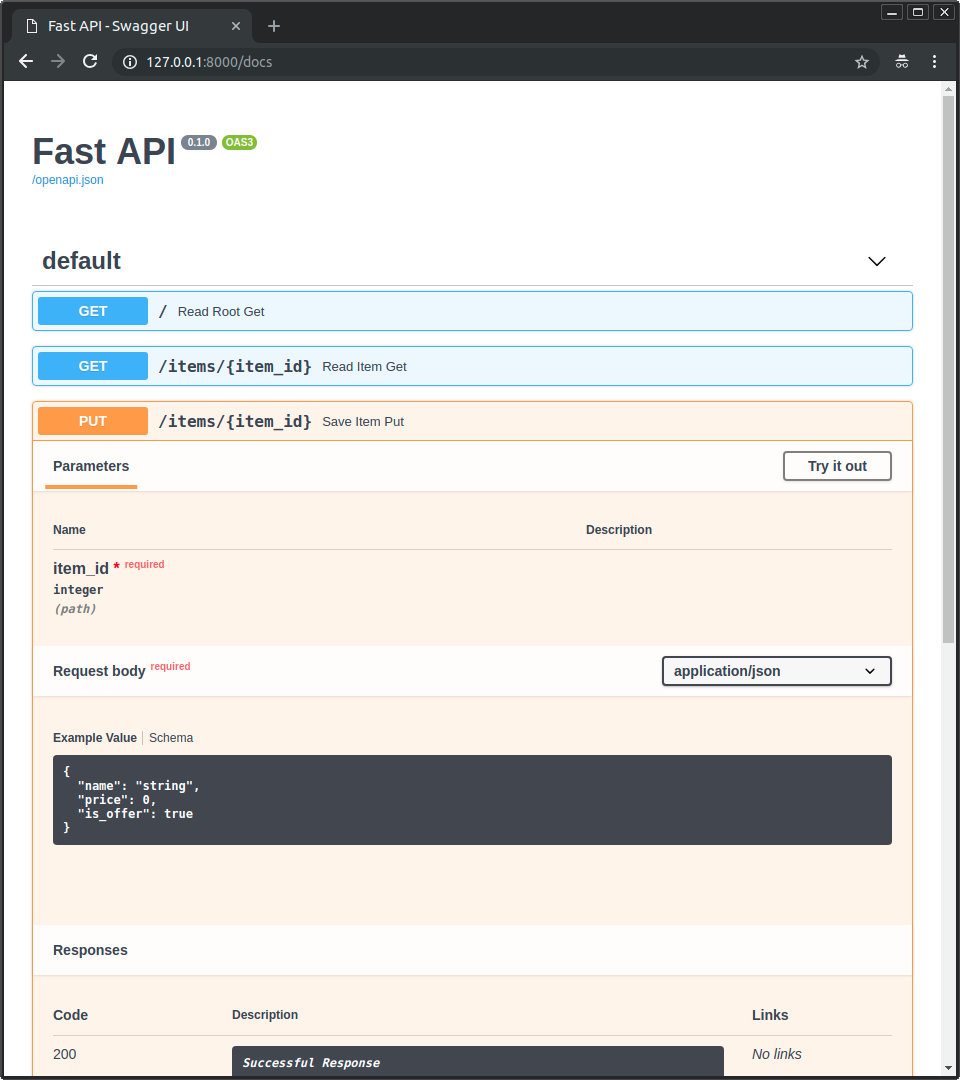
Full REST API with interactive docs — great for integrations, automation, or just exploring the response schema.
uvicorn backend.main:app --reload→ Swagger UI: http://localhost:8000/docs
→ ReDoc: http://localhost:8000/redoc
git clone https://github.com/YOUR_USERNAME/competitor-intel.git
cd competitor-intelpython -m venv venv
# Mac / Linux
source venv/bin/activate
# Windows
venv\Scripts\activatepip install -r requirements.txtcp .env.example .envEdit .env:
GEMINI_API_KEY=your_key_here        # Required — get free at aistudio.google.com
JINA_API_KEY=your_key_here          # Optional — improves scraping quality
Get a free Gemini key → aistudio.google.com/app/apikey
# Streamlit UI
streamlit run frontend/app.py

# OR FastAPI server
uvicorn backend.main:app --reloadRun the full 3-stage intelligence pipeline.
Request body:
{
  "competitors": ["Notion", "Linear", "Basecamp"],
  "options": {
    "include_blog": true,
    "include_careers": true
  }
}
Accepts names or URLs — "Notion", "notion.so", or "https://notion.so" all work.
Constraints: minimum 2 competitors, maximum 5.
Response: Full IntelligenceReport — see schema at /docs.
Service health check.
{ "status": "ok", "service": "competitor-intelligence-monitor" }The FastAPI server auto-generates interactive docs with the full response schema, request validation, and a live Try it out button.
http://localhost:8000/docs
Input (names or URLs)
        │
        ▼
┌─────────────────────────────────────────────────┐
│  Stage 1 — Scrape  (async, all competitors)      │
│  ├── Domain resolution (name → TLD probing)      │
│  ├── Jina AI Reader (clean markdown)             │
│  └── BeautifulSoup fallback (raw HTML clean)     │
│  Pages: homepage · pricing · about · blog · jobs │
└───────────────────────┬─────────────────────────┘
                        │
                        ▼
┌─────────────────────────────────────────────────┐
│  Stage 2 — Analyze  (per competitor, sequential) │
│  ├── Token-aware page merging (priority order)   │
│  ├── Gemini prompt with 5-band momentum rubric   │
│  ├── Smart JSON cleaning (escape fixer + regex)  │
│  └── 429 rate-limit handler (reads retry_delay)  │
└───────────────────────┬─────────────────────────┘
                        │
                        ▼
┌─────────────────────────────────────────────────┐
│  Stage 3 — Compare  (cross-competitor synthesis) │
│  ├── Structured comparison prompt                │
│  ├── Market leader · fastest mover · pivot       │
│  ├── Messaging gap analysis                      │
│  └── 6–8 sentence executive briefing             │
└───────────────────────┬─────────────────────────┘
                        │
                        ▼
              IntelligenceReport
        (Streamlit UI  /  API JSON)
competitor-intel/
├── backend/
│   ├── main.py                    # FastAPI app + run_intelligence_pipeline()
│   ├── config.py                  # Pydantic settings (env vars)
│   ├── services/
│   │   ├── scraper_service.py     # Async scraper — Jina + BS4 fallback
│   │   ├── analysis_service.py    # Gemini analysis with momentum rubric
│   │   └── comparison_service.py # Cross-competitor synthesis
│   ├── models/
│   │   └── schemas.py             # Pydantic schemas (request + response)
│   └── utils/
│       ├── chunker.py             # Token-aware page merger
│       └── cleaner.py             # HTML → plain text cleaner
├── frontend/
│   └── app.py                     # Streamlit UI with progress + export
├── requirements.txt
└── .env                           # Your API keys (not committed)
All settings live in config.py and are loaded from .env:
| Variable | Default | Description |
|---|---|---|
GEMINI_API_KEY |
— | Required. Your Gemini API key |
JINA_API_KEY |
"" |
Optional. Improves scraping quality significantly |
DEFAULT_MODEL |
gemini-2.0-flash |
Gemini model to use |
MAX_PAGES_PER_COMPETITOR |
4 |
Homepage + up to 3 sub-pages |
MAX_TOKENS_PER_CHUNK |
6000 |
Token budget per Gemini call |
REQUEST_TIMEOUT_SECONDS |
15 |
HTTP timeout per page fetch |
Gemini scores each competitor 1–10 using a calibrated 5-band rubric — not a "safe 7":
| Score | Meaning |
|---|---|
| 9–10 | All signals firing: major launches + broad hiring + pricing expansion + AI push + new markets |
| 7–8 | Most signals present: recent updates, moderate hiring, growth messaging, some AI |
| 5–6 | Maintaining not expanding: mature product, stable messaging, selective hiring |
| 3–4 | Few growth signals: defensive messaging, static pricing, thin content, no launches |
| 1–2 | Stagnation or decline: anti-growth messaging, no hiring, no updates, legacy positioning |
Calibration rules: Large company ≠ high momentum (TCS ≠ 9). Small startup with thin content scores 3–4, not 7. When uncertain, Gemini scores lower, not higher.
Try these to see differentiated momentum scores in action:
| Category | Competitors to compare |
|---|---|
| Project management | Linear, Notion, Basecamp |
| AI writing | Jasper, Copy.ai, Writesonic |
| Indian ed-tech | Scaler, Internshala, Unstop |
| AI dev tools | Cursor, Replit, GitHub Copilot |
| CRM | HubSpot, Zoho CRM, Freshsales |
| Layer | Tool | Why |
|---|---|---|
| AI Brain | Gemini 2.0 Flash | Fast, cheap, long context window |
| Backend API | FastAPI + uvicorn | Auto-generates Swagger UI, async-native |
| HTTP client | httpx (async) | Concurrent scraping across competitors |
| Scraping | Jina AI Reader + BeautifulSoup | Clean markdown first, HTML fallback |
| Frontend | Streamlit | Rapid UI with progress tracking |
| Validation | Pydantic v2 | Request/response schema enforcement |
| Settings | pydantic-settings | Type-safe env var loading |
- Rate limits — Gemini free tier has per-minute quotas. The analyzer reads the
retry_delayfrom 429 errors and waits exactly that long before retrying. Running 3+ competitors sequentially takes 40–90 seconds. - Domain resolution — When you enter a company name (not a URL), the scraper probes
.com → .io → .co → .aiand uses the first that responds with HTTP < 400. - Jina fallback — If Jina AI fails, the scraper fetches raw HTML and cleans it with BeautifulSoup. Content quality may be slightly lower but the pipeline never silently drops pages.
- JSON recovery — If Gemini returns malformed JSON (e.g. unescaped backslashes), the parser attempts two recovery passes before falling back to an empty analysis.
MIT — use it, fork it, ship it.