Cobalt Strike is a commercial penetration testing tool often used to simulate advanced persistent threats (APTs). It provides red teams and attackers with a platform for conducting complex operations, including command-and-control (C2) operations, lateral movement, and stealthy command execution.
Cobalt Strike uses a beacon payload that communicates with a C2 server (Command-and-Control), where attackers can issue commands, exfiltrate data, or perform lateral movement across a network.
In adversary infrastructure hunting, tools like Shodan help identify publicly accessible Cobalt Strike Team Servers, which are often abused by malicious actors. Security teams scan for and analyze these servers to mitigate potential threats.
This file contains IP addresses identified via Shodan searches. The searches are designed based on characteristics observed in Cobalt Strike beacons that communicate with known C2 servers. The IPs listed are potential Cobalt Strike Team Servers that require further scanning.
Example entry: 47.97.79.97
This file contains IP addresses that have been scanned and confirmed to be Cobalt Strike Team Servers. These servers are confirmed after scanning the IPs from list_1.txt using Nmap or another tool and detecting a Cobalt Strike beacon.
Example entry: 47.97.79.97
This file stores the C2 server configuration details extracted from the Cobalt Strike beacon. The information includes the methods of communication (GET/POST), server URLs, polling intervals, beacon types, and other relevant data about how the beacon contacts its C2 server.
Example entry based on the sample beacon: C2 Server IPs:
61.170.80.230/jquery-3.3.1.min.js 180.213.179.141/jquery-3.3.1.min.js 120.195.185.112/jquery-3.3.1.min.js 118.182.226.161/jquery-3.3.1.min.js 61.170.81.233/jquery-3.3.1.min.js 27.37.200.237/jquery-3.3.1.min.js 101.226.26.147/jquery-3.3.1.min.js
This file contains the C2 host header information from the beacon. The host header is part of the HTTP requests that the beacon sends when communicating with the C2 server. This helps security teams understand how the beacon might be disguising its communication.
Example entry based on the sample beacon:
Using a sample beacon , the following information can be extracted:
- The beacon was scanned on IP 47.97.79.97, which was identified through a Shodan search and scanned using Nmap.
- The C2 server information includes:
- x64 C2 Servers:
61.170.80.230/jquery-3.3.1.min.js,180.213.179.141/jquery-3.3.1.min.js,120.195.185.112/jquery-3.3.1.min.js,118.182.226.161/jquery-3.3.1.min.js,61.170.81.233/jquery-3.3.1.min.js,27.37.200.237/jquery-3.3.1.min.js,101.226.26.147/jquery-3.3.1.min.js - x86 C2 Servers: Same as x64
- x64 C2 Servers:
- The beacon uses HTTP GET and POST methods for both 32-bit and 64-bit systems.
- The polling interval is set to 5987 milliseconds.
- The Host Header is:
Host: haifang310.com.
Contains the IP that was searched using Shodan and identified as a potential Cobalt Strike server:
47.97.79.97
After the Nmap scan confirmed the presence of a Cobalt Strike beacon, the IP is added here: 47.97.79.97
The details extracted from the beacon's configuration, including C2 server information and HTTP communication patterns:
C2 Server IPs:
61.170.80.230 180.213.179.141 120.195.185.112 118.182.226.161 61.170.81.233 27.37.200.237 101.226.26.147
The beacon's C2 host header (if any): Host Header: Host: haifang310.com
{
  "timestamp": 1725167366.1659446,
  "nmap_cmd": "/usr/bin/nmap --script grab_beacon_config.nse -vv -d -n -F -T5 -oX - 47.97.79.97",
  "ip": "47.97.79.97",
  "port": "443",
  "protocol": "tcp",
  "service": "https",
  "hostnames": null,
  "x64_sha1": "3c2febf7d07a9e02a7997d85378024b23fb30f42",
  "x64_sha256": "dd9ac5fbbdf23bdd88e33e655d890a049ab62bbbd84795bb73127e875bea171d",
  "x64_md5": "0ee9cb77529c6eefe1bc8d6091b1e907",
  "x86_sha1": "666cee97054524e4f43763958adff22e4d1b32c6",
  "x86_sha256": "2421a42eb5fb1dd545839d4ef72add5f3c0846beb3c7e187f336ddb7c7ac28dd",
  "x86_md5": "5aa5514d8bd9d3ad9226d3b9611b22df",
  "x64_config_method_1": "GET",
  "x64_config_method_2": "POST",
  "x64_config_port": 443,
  "x64_config_spawn_to_x64": "%windir%\\sysnative\\svchost.exe",
  "x64_config_spawn_to_x86": "%windir%\\syswow64\\svchost.exe",
  "x64_config_jitter": 50,
  "watermark": 391144938,
  "c2_host_header": "Host: haifang310.com\r\n",
  "x64_config_polling": 5987,
  "x64_config_c2_server": [
    "61.170.80.230/jquery-3.3.1.min.js",
    "180.213.179.141/jquery-3.3.1.min.js",
    "120.195.185.112/jquery-3.3.1.min.js",
    "118.182.226.161/jquery-3.3.1.min.js",
    "61.170.81.233/jquery-3.3.1.min.js",
    "27.37.200.237/jquery-3.3.1.min.js",
    "101.226.26.147/jquery-3.3.1.min.js"
  ],
  "x64_config_beacon_type": "8 (HTTPS)",
  "x64_config_http_method_path_2": "/jquery-3.3.2.min.js",
  "x64_uri_queried": "/ILtT",
  "x86_config_method_1": "GET",
  "x86_config_method_2": "POST",
  "x86_config_port": 443,
  "x86_config_spawn_to_x64": "%windir%\\sysnative\\svchost.exe",
  "x86_config_spawn_to_x86": "%windir%\\syswow64\\svchost.exe",
  "x86_config_jitter": 50,
  "x86_config_polling": 5987,
  "x86_config_c2_server": [
    "61.170.80.230/jquery-3.3.1.min.js",
    "180.213.179.141/jquery-3.3.1.min.js",
    "120.195.185.112/jquery-3.3.1.min.js",
    "118.182.226.161/jquery-3.3.1.min.js",
    "61.170.81.233/jquery-3.3.1.min.js",
    "27.37.200.237/jquery-3.3.1.min.js",
    "101.226.26.147/jquery-3.3.1.min.js"
  ],
  "x86_config_beacon_type": "8 (HTTPS)",
  "x86_config_http_method_path_2": "/jquery-3.3.2.min.js"
}- Cobalt Strike is a powerful tool for penetration testing but is often misused by threat actors.
- list_1.txt contains potential IPs found via Shodan searches.
- list_2.txt stores confirmed Cobalt Strike servers after scanning. It's a subset of list_1.txt
- list_3.txt holds configuration details of how the beacon communicates with its C2 server. It can also contain the ips of list_2.txt
- list_4.txt stores the host header used by the beacon during communication.
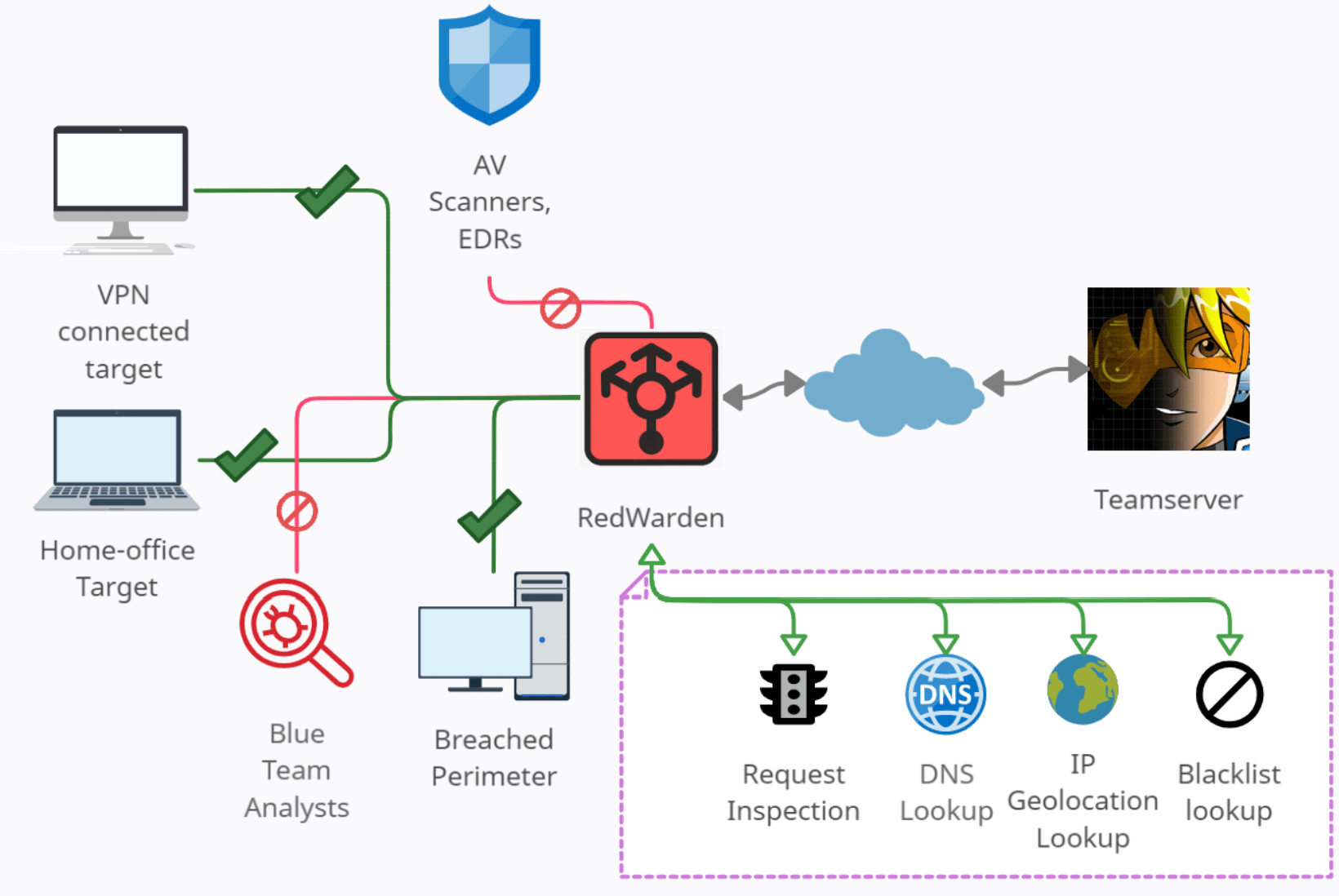
- list_5.txt contains IP addresses associated with Redwarden infrastructure.
- list_6.txt contains IP addresses tied to Redguard infrastructure.
- list_7.txt contains IP addresses of possible Cobalt Strike servers that are hidden behind Cloudflare.
- list_8.txt contains domains routed through Cloudflare that are likely pointing back to Cobalt Strike team servers.
Thank you!
- Shodan
- Censys
- https://github.com/drb-ra
- https://github.com/splunk/melting-cobalt
- https://github.com/whickey-r7
- @MichalKoczwara