
In this training, I learned about Object Oriented Programming (OOP) concepts and their applications. Below you can find the topics and projects I covered during the training.
Object Oriented Programming is a paradigm used in software development. This paradigm is based on creating objects that contain data and functions that operate on that data.
Classes are templates for objects. Each class defines certain properties and behaviors. Objects are instances created from these classes.
UML (Unified Modeling Language) is a language used to visually model software systems. Class diagrams are UML diagrams that show classes and the relationships between these classes.
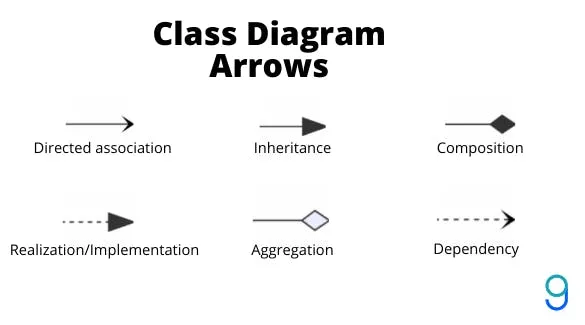
I drew various class diagrams and completed projects to reinforce the topics I learned during the training. Here are some examples:
I designed a system for university management and drew its class diagram.
Encapsulation ensures data is hidden and only accessible from necessary places.
Inheritance allows one class to inherit the properties and behaviors of another class.
Polymorphism allows different classes that share the same interface to implement this interface in different ways.
Abstraction reduces complexity by hiding unnecessary details and highlighting only the necessary features and behaviors.
I designed a system for zoo management and drew its class diagram.
I designed a system for managing flights and pilots and drew its class diagram.
I designed a system for an application that sells or rents movies online and drew its class diagram.
I designed a simulator that models the operations of elevators in a building and drew its class diagram.
You can access all my projects from this repository.
For creating UML diagrams, you can use this UML Diagram Tool.